Moira is easily the most realistic character in this book. Breaking out of the indoctrination center/academy for handmaids proves that human nature in this book doesn't breed submissiveness but autonomy. Whereas everyone else felt trapped in their roles, or subverted them only secretly, Moira broke the chains of oppression to free herself from her authoritarian masters.
Moira is introduced as a controversial character in the new society; she is the archetype of what this new order is meant to inhibit, a lesbian, formerly-feminist free-thinker. By bringing up that she is a lesbian at various points, Atwood creates a strong sense of friction with the child-bearing-centric world. She builds the new world as a place of terror, wherein no personal authority is held by anyone but the state and the commanders for a couple of reasons, the main of which being alleviating care for children. By introducing someone, praised and looked to at various points by the protagonist, who is incapable of producing children by her orientation, Atwood instills advocacy for personal freedom through expression.
Censorship of expression is a guarantee in America, and I read a story a couple weeks ago on the boy scouts furthering it: http://www.oregonlive.com/silicon-forest/index.ssf/2012/11/intel_will_end_support_for_ore.html
Tuesday, November 27, 2012

Monday, November 26, 2012
Jonny Sims explains the meaning of life
Why is life worth living? Material possessions? Petty desires and hopes and dreams? Achievement? Love? By these ideologies, we wouldn't have advanced from cavemen to civilized humans because cavemen wouldn't have wanted to live. Miranda, saying things like “I wonder if I'll ever have to decide what's worse, life we we’re living, or no life at all.”, proves to be an avid believer that she was born to buy things.
1. Life has meaning
6. Egotism is self-evident
7. Meaning of life is Egotism
Heres an artical on some hollywood capitalist pig profiting on the inability or indecisiveness of the masses to answer their own questions on origin: http://www.bostonherald.com/entertainment/movies/general/view/20221123lee_ponders_meaning_of_life/srvc=home&position=also
These ideas that life is derived from the manifestations of mankind are reversed and over-simplified. As life develops, it gains a certain consciousness about origin. This consciousness, manifested more commonly as “Why am I here?”, is a rationalization of the fact that one is alive and one would like to stay alive for as long as possible. The real question stems from that initial yearning for living. Why did cavemen want to keep living? Because it is selfish.
Egotism is the essence of life. You are only alive as you are self-centered. To answer the question “Why should I be here”, one must break themselves down to their innermost desires. Life is the most precious present possible, proven over and over again by high-pressure situations everyday. And the very asking of this question acknowledges a certain desire to protect one's interests, as it is in regards to their most precious possession. Thus, if one asks for meaning of something because of egotistic selfishness, and the very asking is the something, couldn't it be said that the meaning is selfishness:
2. One asks for the meaning of life
3. Asking for the meaning of life is microcosmically life
3. Asking for the meaning of life is microcosmically life
4. One asks is one being egotistic
5. Being egotistic is microcosmically life6. Egotism is self-evident
7. Meaning of life is Egotism
If you believe #3 is controversial, then you haven't ever lived, or you're lying to yourself. What gets you up in the morning, or lingers on your mind before you sleep? This degree of questioning is prevalent to such an extent that I can safely say that a snapshot, a single day of my life, summing up what I do on a day-to-day basis would include at least a thought on why I am anything at all.
Heres an artical on some hollywood capitalist pig profiting on the inability or indecisiveness of the masses to answer their own questions on origin: http://www.bostonherald.com/entertainment/movies/general/view/20221123lee_ponders_meaning_of_life/srvc=home&position=also
I would rather starve than be fed (haha get it, feed?)
A feed is another incarnation of complete slothfulness. Mine would be a step into the direction of a mindless audiophilic apocalypse: a music service perfectly accustomed to what I want to hear at all times, from my phone or pc. By using this, the authenticity in discovering, communicating, and sharing the most obscure artists would vanish into apathy. The artistic qualities of music rely just as heavily upon the efforts of the listener as the composition of the artist.
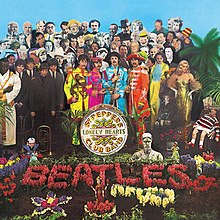
As the great critic Piero Scaruffi once said, “The fact that so many books still name the Beatles "the greatest or most significant or most influential" rock band ever only tells you how far rock music still is from becoming a serious art.” This idea that greatness, creativity, or artistry can be equated with popularity couldn't be more inverted. By learning about a band without research or discussion, that band loses its sense of expression. Hearing “All you need is love” on the radio won't invoke any life changing pacifistic realizations. However, when grinding hours of research or discussion into a topic yields some artist with a similar musical nature, something else will be going through your head when listening than if your parents just had the artists’ records in your basement. For these reasons, by a band being able to be popular, by a band being accessible, the band thus is interpreted more simplistically by listeners. Only through obscurity can a listener ever hope to find musical enlightenment.
The feed would bring me to musical limbo. I would listen to new artists, with more eclectic instrumentation and varied stylistic song structures. But I would comprehend it like a true plebeian, with thoughts like “This is good,” or “This is bad.” I would lose all sense of purpose in this art, rendering it useless. The feed would corrupt my soul through the allowance of laziness.
As the great critic Piero Scaruffi once said, “The fact that so many books still name the Beatles "the greatest or most significant or most influential" rock band ever only tells you how far rock music still is from becoming a serious art.” This idea that greatness, creativity, or artistry can be equated with popularity couldn't be more inverted. By learning about a band without research or discussion, that band loses its sense of expression. Hearing “All you need is love” on the radio won't invoke any life changing pacifistic realizations. However, when grinding hours of research or discussion into a topic yields some artist with a similar musical nature, something else will be going through your head when listening than if your parents just had the artists’ records in your basement. For these reasons, by a band being able to be popular, by a band being accessible, the band thus is interpreted more simplistically by listeners. Only through obscurity can a listener ever hope to find musical enlightenment.
The feed would bring me to musical limbo. I would listen to new artists, with more eclectic instrumentation and varied stylistic song structures. But I would comprehend it like a true plebeian, with thoughts like “This is good,” or “This is bad.” I would lose all sense of purpose in this art, rendering it useless. The feed would corrupt my soul through the allowance of laziness.
=/= 
Subscribe to:
Comments (Atom)